2011 in Review

Happy New Year to everyone! I hope you’re all busy with your winter gardening projects. (Who says gardeners get a break during the winter?)
One thing I love about WordPress is the annual review they give me of my blog every year. Feel free to poke through the stats and see what you all found most interesting. Click here to see the complete report.
New in 2012
This year I’m going to spend time thinking about the direction of The Suburban Farm and what it can become. This is an excellent opportunity to talk about what YOU would like this space to be. What kind of content would you like to see?
- More photos?
- More how-to’s?
- Recipes?
- More specifics about vegetable gardening in urban and suburban spaces?
- What about a social community?
I started this as a space for those of us toiling away in yards and other residential spaces, for those who love the grit of hard work and probably also have to show off those gritty fingers in the office, too.
I would love to hear your thoughts on continuing down this path. Let’s put our heads together!
Let’s Make Beet Cake
Confession: I don’t like beets.
I keep trying them, and I keep shying away. Their earthy flavor is too strong.
But they are so beautiful! That’s what leads me back every time. Beautiful to behold, hard to swallow.
I came across this gorgeous video recipe for beet cake, and I couldn’t resist.
So I tried it.

Using the beets rolling around in the refrigerator from a CSA haul.
It’s an easy recipe, nothing more than your basic chocolate cake. It took extra time to cook and puree the beets.
And you know what? It didn’t come out that bad. The beet flavor is there, but it’s wrapped in a chocolate cake.
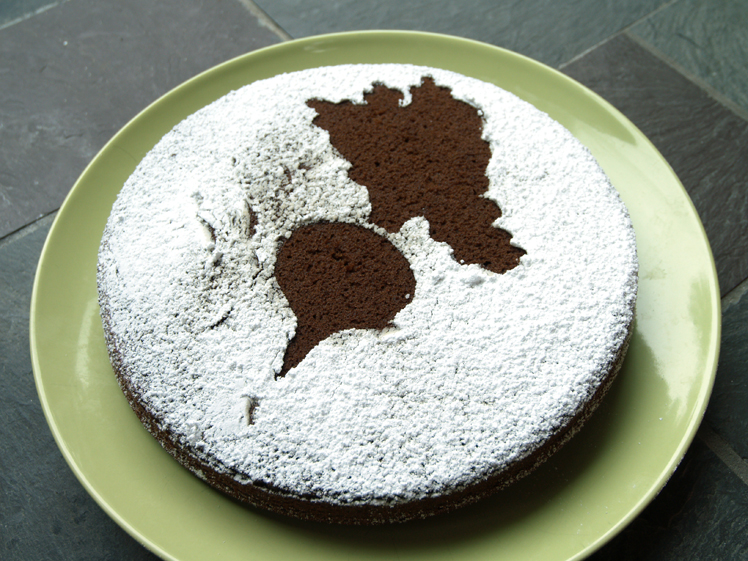
I had enough batter for two nine-inch cakes.

What do you think of beets?
I Miss My Wisteria
This time of a year is a little hard for me. The wisteria are in bloom, and I miss the gorgeous wisteria at our old house.
When we bought the house in 2004, the wisteria was just a baby. Nothing more than a puff partially covering the arbor.

One May—I think it was 2006 or 2007—it bloomed for the first time. I couldn’t believe it! The day I saw the flowers budding, I tore across the yard to inspect it. Was it really true? After that, I looked forward to every May for the lavender blossoms and subtle, sweet grape scent in the air.

Soon its gnarled wood stem began pulling the arbor to the ground, and the unruly tuft wound around everything it could grasp.

It became a magical little hideaway. A secret garden. I loved to look up through its leaves and feel like no one could see me hiding in my corner. (But I could see them!)

Even my son knew—early on—there’s something special about hiding under the wisteria.

Maybe we’ll plant one at our new house. Or maybe I’ll keep this one in my memory and give the new plants a fighting chance. Because as much as I love wisteria, it’s a difficult plant to manage.
Spring: Snow, Peas, and Starting Seeds
Spring is here! Happy first day of spring, everyone! For many of us, it’s been a long winter.

However, ’round here today it’s SNOWING.

To celebrate the arrival of spring, I planted peas and radishes. Last year I wasn’t happy with how the peas turned out. So this year I decided to overcompensate by planting more than 200 pea seeds. We eat lots of peas in our house, and I’m planning to freeze them. I chose Dakota shelling peas for their high yield and excellence in freezing. Also, at 60 days, they’re on a perfect rotation schedule before the pole beans go in the ground.
In other seed news, I had planned to start seeds this weekend, but when I consulted my handy seed starting chart, I realized I’m about a week early.
Honing my schedule for starting seeds is still a work in progress. Start too early, and you’re stuck with a bunch of leggy seedling that desperately need to be hardened-off and put in the ground, but it’s still too cold. You can start late, and that’s OK. I’d rather be late than kill off everything.
It looks like April 20 will be the magic week for me to start most of my seeds. Tomatoes will be next week. Here in zone 6, I use mid-May as the last frost date (this year I bumped it to May 18). Of course that fluctuates each year. I’ve had great success with mid-May. Some swear by Mother’s Day, but this year it falls on May 8. A little early, don’t you think?
Signs of Spring
While I wait for my coconut coir to arrive so I can start my seeds, I’ve begun to notice a distinct turn toward spring.

I miss having crocuses.
Skunks are out an about making their presence known. And last night I dodged a road full of peepers. For me, Spring Peepers are it. I know the worst is over when they’re out.
The rain has been heavy for two days, steadily beating away at the snow. I never thought I’d find so much novelty in seeing the ground for the first time in three months.
I’ve heard reports of crocuses, but nothing has appeared in my yard. In fact, I don’t even know if I have crocuses on this new property. If not, they’ll be there next year.
What are your favorite signs of spring?
Cooking With Acorns
I wish I’d stumbled across this post a year ago. Back when we lived in a house surrounded by black oaks.

ca. 2008. One of three generous oaks in our yard.
Every fall we battled the acorns. Two of the seven autumns we lived in the house were actually mast years—back to back. If you’ve never had a mast year for acorns—or anything—you’ll have to trust I’m not being hyperbolic when I describe the deluge of acorns as a carpet. There’s no other accurate way to describe it.
For weeks the acorns rained on us, rocketing through the canopy and pinging off cars and roofs. We all ran for cover. At night we lay in bed and drifted to sleep to the sound of acorns echoing through the neighborhood on early fall nights.
When it was over, we fought against impending winter to shovel and haul them all away. Buckets. Ninety-five-gallon rubbish-barrels full. It was unreal. I spent years picking the oak saplings out of the gardens.
If only I had thought to collect and mill this abundant resource.
Have you ever turned acorns into food? What other “pest” have you made into food?
Spring Events
Winter may still be here, but I’m excited about the planting season events happening at all three of Baker Creek’s locations.
I’m lucky enough to be near Comstock Ferre, and I’m definitely marking June 5 on my calendar for the 200th year anniversary. Hope to see you there!
Winter CSA
We’re splitting an eight-week winter CSA share from Urban Oaks Organic Farm with our good friends. We discovered the small farm tucked among the tightly wound residential streets of New Britain, and it’s truly an oasis in the city. When I arrived on pickup day, I couldn’t believe I was seeing greenhouses and growing fields between multifamily houses and shops. They’ve been there for 12 years; how could I have missed them?
I’m really glad to have this opportunity. Knowing who is growing my food and that I’m contributing to a cycle of sustainability and local community is really important. If you haven’t heard of CSA’s—community supported agriculture—it’s essentially the purchase of a share of a farm’s harvest. You pay up-front, buy direct from the farm, and usually receive a weekly selection of food. Local Harvest is a great resource for learning more about CSA’s and finding ones near you.
After so many dark weeks, what a joy to peer into the bag and find vibrant winter and salad greens, bright oranges, carrots, beets, fresh herbs, potatoes, onions, and more.
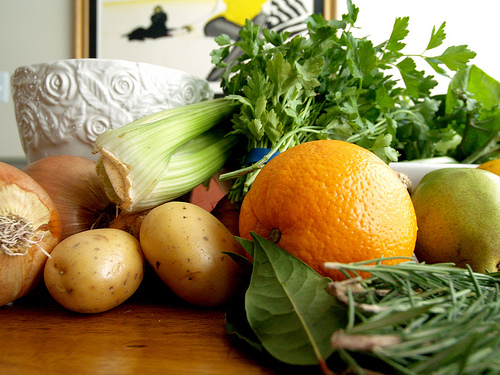
I’ve purchased two CSA shares for 2011: this winter one and a 20-week summer CSA that begins in June. I’m hoping that between these two, plus what I grow, I won’t buy any more produce until next fall. Of course this is a major challenge, especially with a small child who likes bananas, plus special occassions always come up.
Have you purchased a CSA before, or have you been thinking about one? Do you buy a CSA to supplement what you grow?
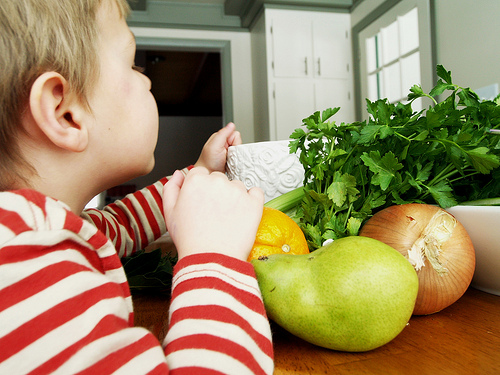
Excited to see what's in the bag.

Pears! Yessssss!
Nothing But Snow
There isn’t much gardening happening; I haven’t even begun to start seeds. (or buy them!)
We received another helping of snow last night, and this morning dawned beautiful over a white confectionery wonderland.


The Dirty Life
I don’t know about you, but nothing is more inspiring than a well-told story. Currently I’m being inspired by Kristin Kimball’s The Dirty Life.
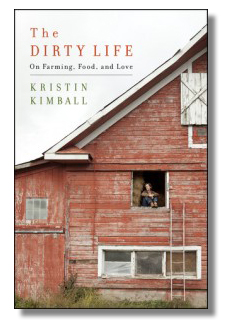
I’m about halfway through the book and I’m smitten. Absorbed in the experience of her experience.
Kimball’s story follows the path many of us dream about: Woman renounces the fast-paced, packaged goods urban life for the grit of farming and love. Banking everything on a harebrained dream. Leaving the life she knows for a world of nothing but raising amazing food. Wouldn’t we all want to quit our day jobs and just dig in the dirt?
And then you travel with her through the depths of winter, the back-breaking work, the tears, the strains, and the primal transformations. The work never ends. The farm always takes priority.
But like any of us who give everything for something we love, the pain and the sacrifice are small prices to pay for the glorious reward.
Kimball and her husband Mark’s passion for building a sustainable food culture is the core of the book. From the beginning moments of their relationship, it was a love borne by beautiful, fresh foods. As you read, you’ll feel a welling desire to fill your home with squashes and brilliant root vegetables. You’ll be desperate to pull them from the earth and bite through their skins while you’re still kneeling in the dirt. Nothing else will make sense but building a warm, wholesome environment of fresh offerings. It’s romanticism at its best.
I think we’re all in danger of romanticizing farm life. Kimball’s brilliant imagery of the real work is an important dose of reality. You need to become entrenched in building the farm with her, so you’ll swear you’ll never leave your heated home for a rat-infested farm house. You’ll never pick up animal husbandry and all the blood, poo, and goo that comes with it. You’ll never break your body in the ways a farm demands you do.
You will, however, realize that every bit of hard work you put into your patch of earth—stolen hours in the last winks of daylight, mornings you wake up with shredded muscles and throbbing blisters—are part of the amazing work you do to cultivate a beautiful thing.
Which books have inspired your gardening life?


 The Suburban Farm